
8 min de lectura
Future vs Fantasy: dual careers and life after football with Carlos Moros
Our co-founder Carlos Moros talks with Pedro Marcet about dual careers, team culture and the future of young athletes. Key ideas from the Tour 2026 interview, plus the full video.
People & Play
Editorial team · 19 Jul 2026
Índice de contenidos
More than football: a conversation about people
What happens when a professional footballer, researcher and HR expert sits down to talk about football? You get a conversation that invites reflection on far more than sport.
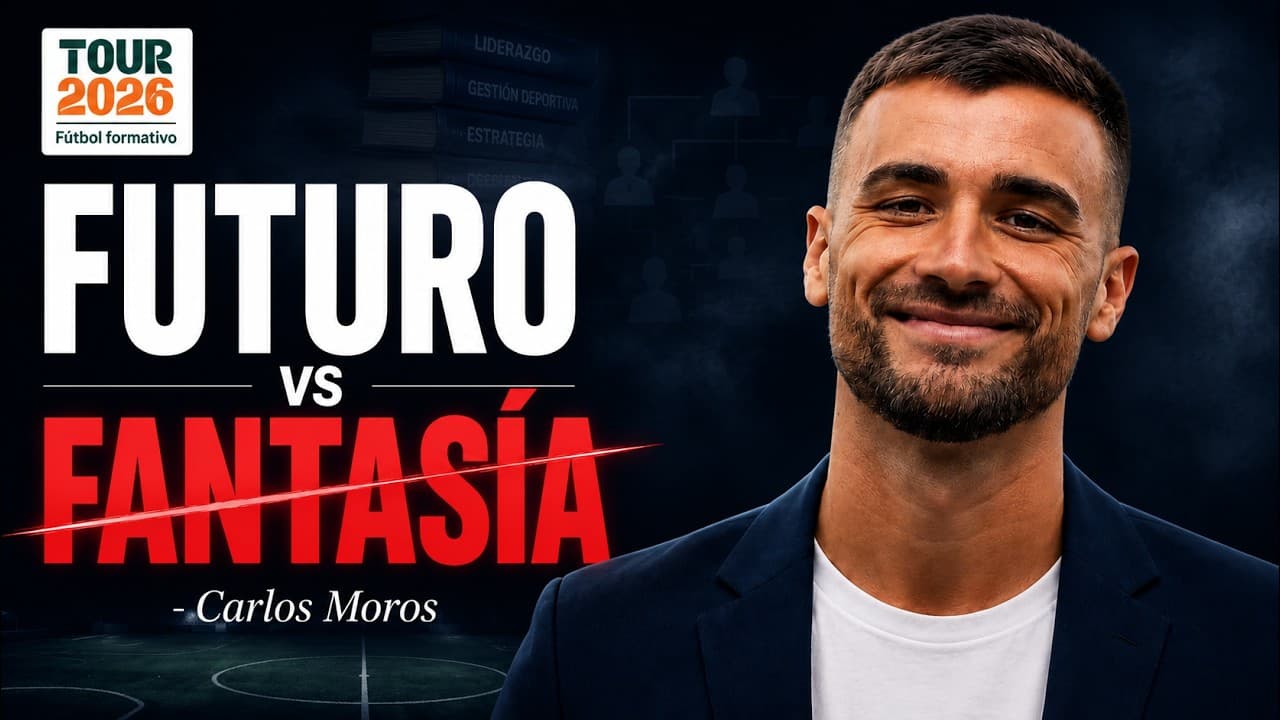
Our co-founder, Carlos Moros, was interviewed by Pedro Marcet from the Plataforma de Fútbol Formativo as part of Tour 2026. The talk, “Future vs Fantasy: dual careers and life after football,” connects high-performance sport with people development, leadership and the future of young athletes.
A perspective shaped by experience and study
After competing in six countries and combining his sporting career with research and Human Resources, Carlos brings a view that goes beyond locker-room anecdotes. He speaks from lived experience, and from study and reflection: how teams are built, how performance is sustained, and what happens when a sporting career ends, or when that ending must be prepared while still competing.
It is an interview for players, coaches, executives and families… and, really, for anyone who works with people. The tensions that show up in football (pressure, identity, culture, leadership, the future) are the same ones that run through organisations in every sector.
Key ideas from the interview
Throughout the conversation, Carlos shares ideas worth hearing slowly. Three of them capture the spirit of People & Play especially well:
- Athletes live two retirements
- Preparing for the future while competing is not optional: it is necessary.
- A dual career is not a sentimental Plan B; it is a development and wellbeing strategy.
- Ignoring the “after” creates anxiety, fragile identity and late decisions.
- Culture always makes the difference
- Teams reach their best when trust, communication and coherent leadership exist.
- Without safety to grow, talent shrinks and performance becomes fragile.
- Culture is not declared in a slide deck: it is trained in everyday conversations and decisions.
- Sport is an extraordinary school for human skills
- Resilience, adaptation, teamwork, pressure management and continuous learning.
- Those competencies stay with people long after their sporting career ends.
- The challenge is translating that experience into the language and results of business.
The reflection we take with us
One line from the interview captures the tone of the conversation and the kind of leadership we stand for: less adult projection onto young people, more contexts of trust and enjoyment.
“Far from pressuring children to live the life their parents would have liked to live, let’s give them freedom; when a context of trust and enjoyment is created, results become much easier to achieve.”
— Carlos Moros
Interview with Pedro Marcet · Plataforma de Fútbol Formativo · Tour 2026
That idea does not only apply to youth football. In companies and sports organisations something similar happens: when the environment is built on fear, comparison or constant urgency, performance becomes short-lived. When there is clarity, trust and room to grow, results arrive with more solidity.
Watch the full interview
We invite you to watch the full conversation and share with us which reflection made you think the most. Thanks to Pedro Marcet for creating spaces where conversations go beyond the weekend result and focus on people development.
See the original LinkedIn post
Why this matters for People & Play
At People & Play we work at the edge between sport and organisation: locker-room culture, leadership, talent and systems that make high performance possible without losing humanity. This interview puts words to something we see every week in clubs and companies: sustainable performance comes from people who develop with purpose, not only from short-term targets.
- Dual careers and professional transition with method, not improvisation.
- Cultures that prioritise trust, communication and psychological safety.
- Leadership able to turn sporting experience into a real competitive advantage.
- Development of young people (and adult teams) from enjoyment and responsibility, not blind pressure.
Conclusion
Future versus fantasy is not a slogan: it is an invitation to prepare tomorrow while competing today. Listening to Carlos is a reminder that sport, when well accompanied, shapes people, and those people can lead, build culture and deliver results on and off the pitch.
If this conversation resonates with what you are living in your club or organisation, let’s keep talking. In the end, the match is always played with people.